In the beginning of the 1970s, when I was in my twenties, I took a ride share from Wisconsin to LA, then hitch-hiked up Highway 1, to begin a new chapter of my life in Berkeley, California. For reasons, unknown to me—a young woman looking to find my way in the world—I’d studied literature at UW Madison, got involved with independent films, but sunk my heart into weaving. I went to Berkeley to study with a weaver and, after a couple years I rented a space in a warehouse on Adeline and Shattuck Avenue. This studio was big enough to hold several looms, including an upright loom that was about eight feet wide and ten feet high, built by a carpenter friend. Once I strung the warp, I took soft, fuzzy balls of wool and, unspooling them onto a shuttle, wove them through the warp, forcefully tamping them down, pounding on the newly laid in weft with a pick.
These six pictures show that process and the seventh shows the final tapestry.
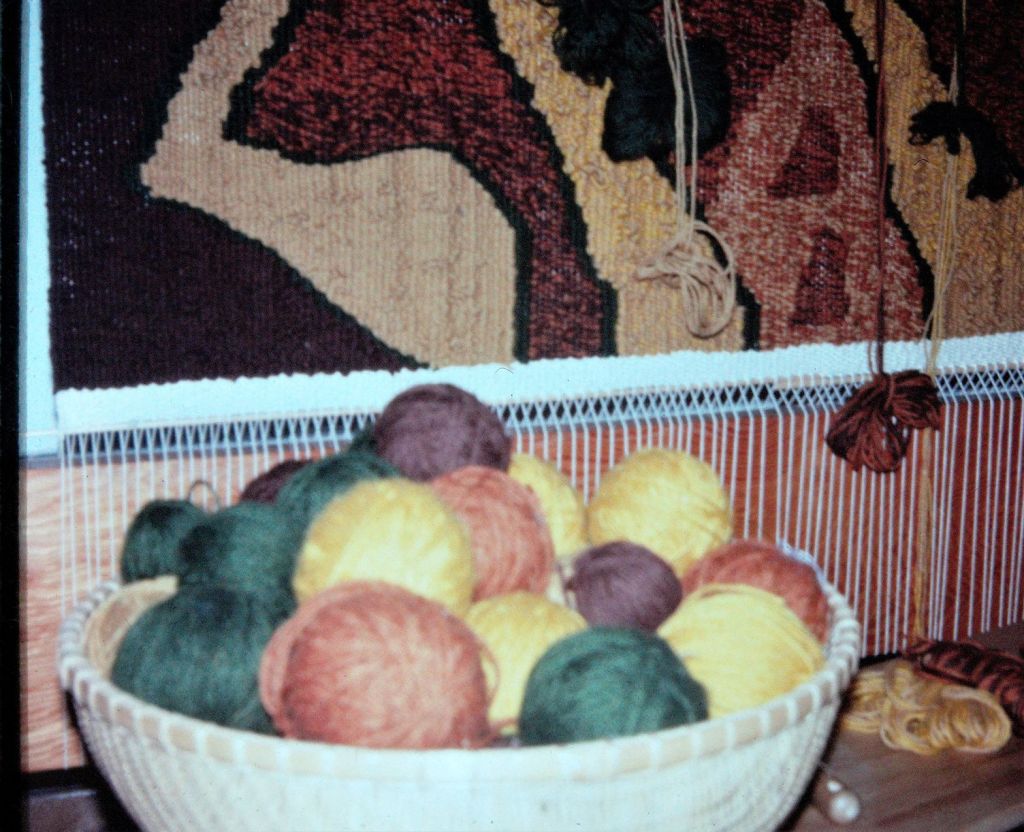
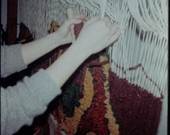
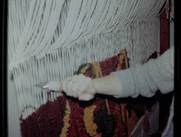
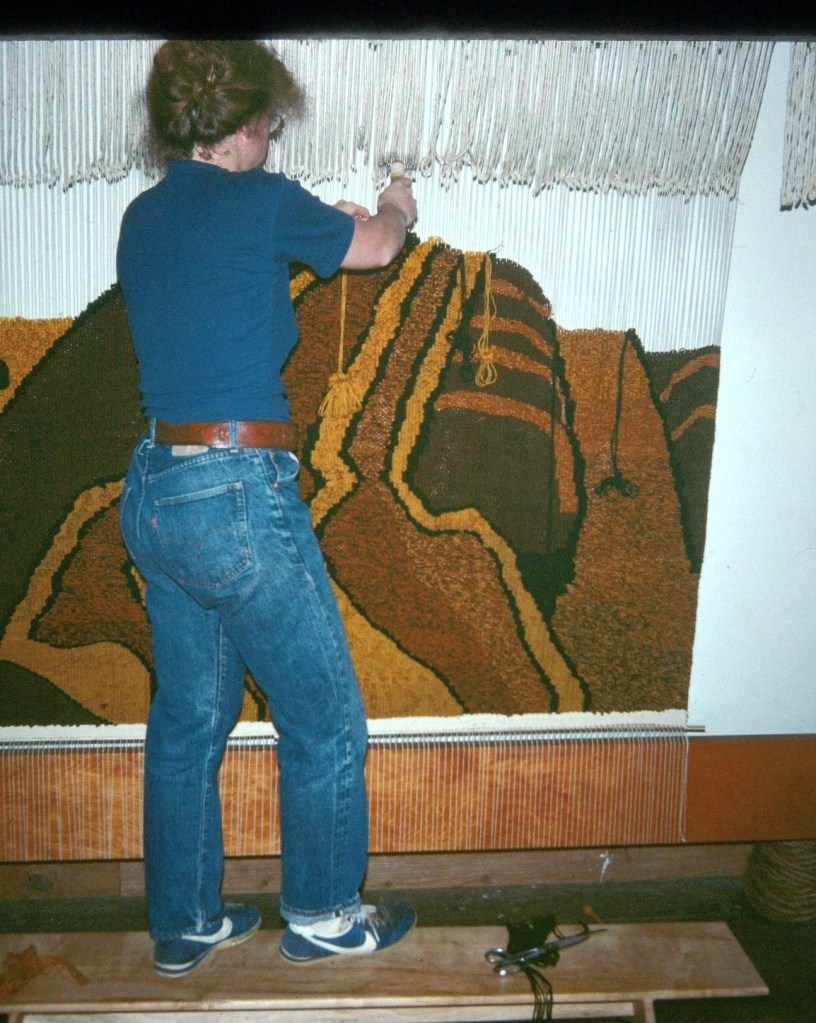
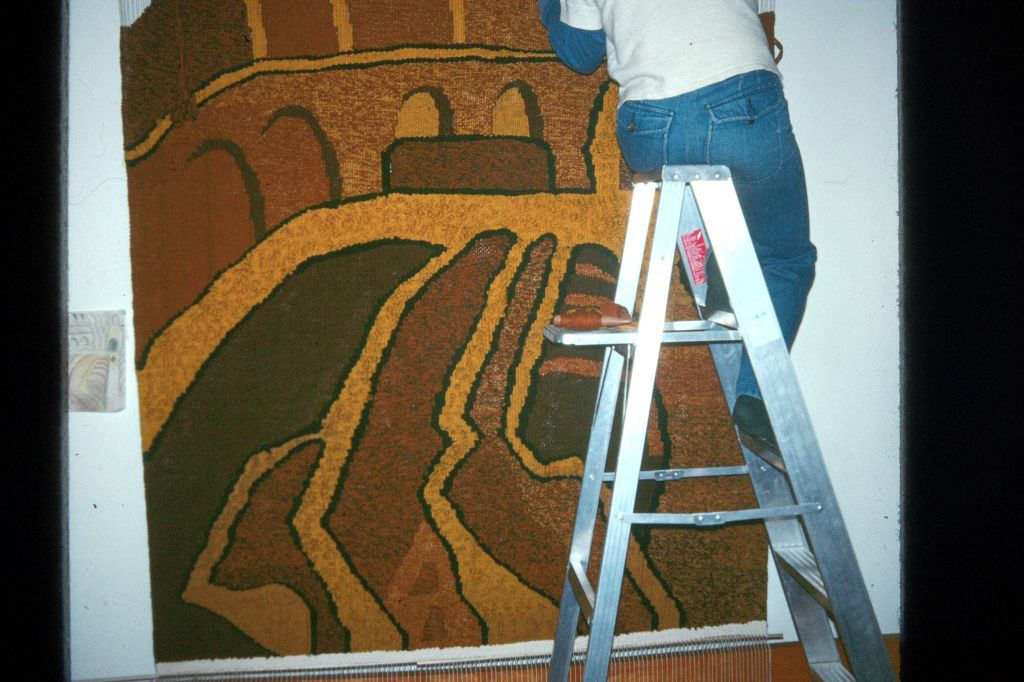
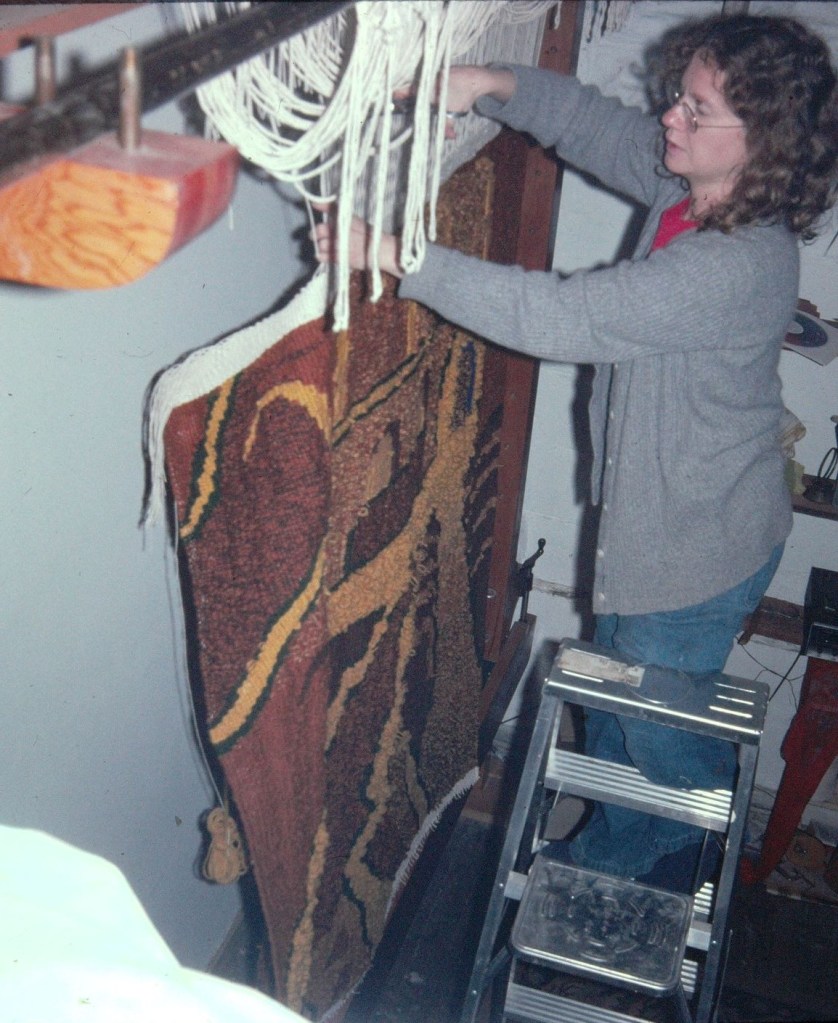
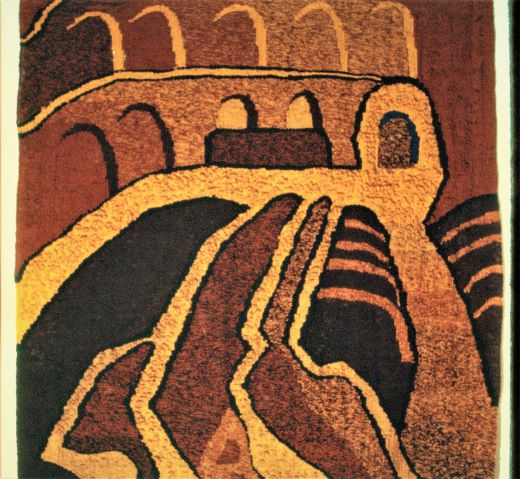
Where are all the tapestries I made back then? I’m not sure. Some are with friends—some of whom I no longer have a clue about their whereabouts—some went to galleries I lost touch with, others got lost or tossed out in the intervening forty years. They’re big, usually at least five feet high or wide, and they are heavy and hard to hang. A couple weeks ago I decided to search for the photos of those weavings, which began an archeological dig. As I uncovered the layers, each stratification shuttled me back through my life, chronologically, upper layers being most recent.
First, I scrolled though my online digital files and watched the last fifteen years of my New York City life flash before me: family—kids, grandkids, great-grandkids, mom, brothers and sisters, friends—in Wisconsin, New Jersey, Brooklyn, Harlem, California; job at Dance Division; trips to Paris, Brazil, Cambodia, Japan; gatherings for birthdays, holidays, anniversaries, deaths. No weavings. Then I pulled out the multiple photo albums from shelves and cabinets. These pictures took me back another twenty years, still in NY: my son coming into my life, grandkids, more trips, more friends, more past, including bands and literary magazines. Everyone grew younger; my hair had color and my husband had hair. Still no weaving pictures. Then Arthur pulled down a plastic bin. Jackpot. I found the late 1960s and 1970s photos, my deepest layer, though not as deep as the albums at my mother’s home with black and whites of my childhood. In the midst of these fading color pictures of my loft in Berkeley and the young selves of my friends and me—including a good number of loved ones who never got the chance to get older—I finally came across the record of my weavings. Slides in albums made to show galleries, slides in boxes.
Some early works, more colorful and flatter than later tapestries.
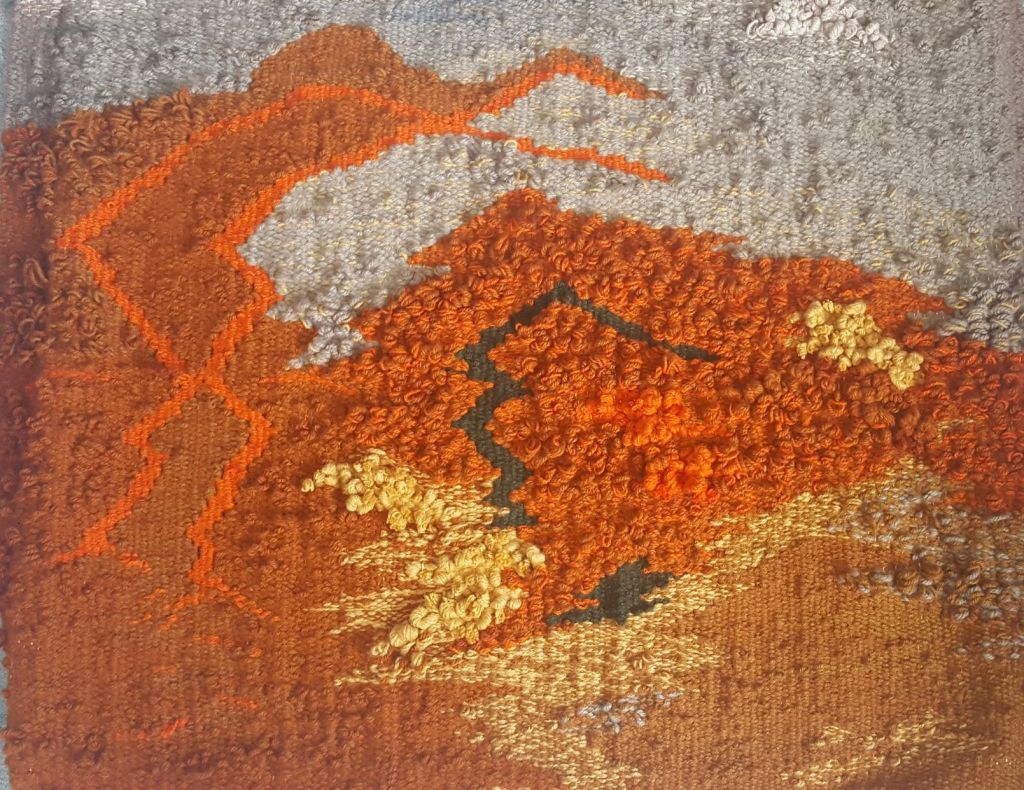
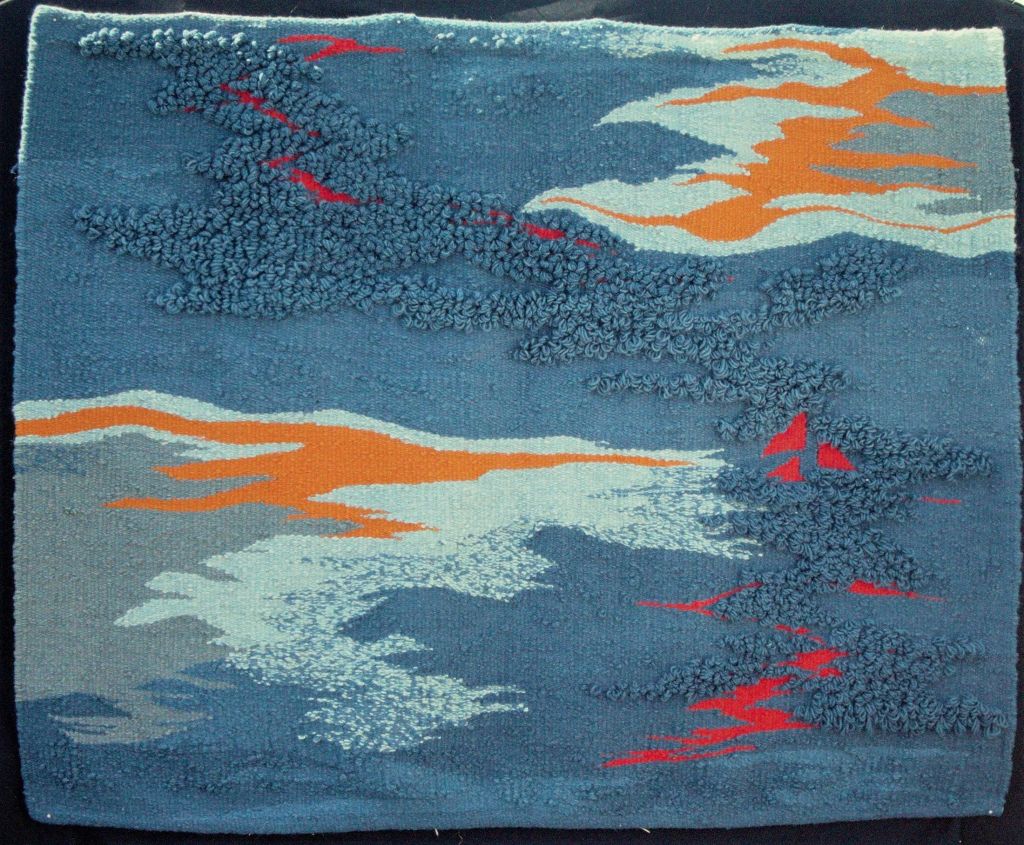
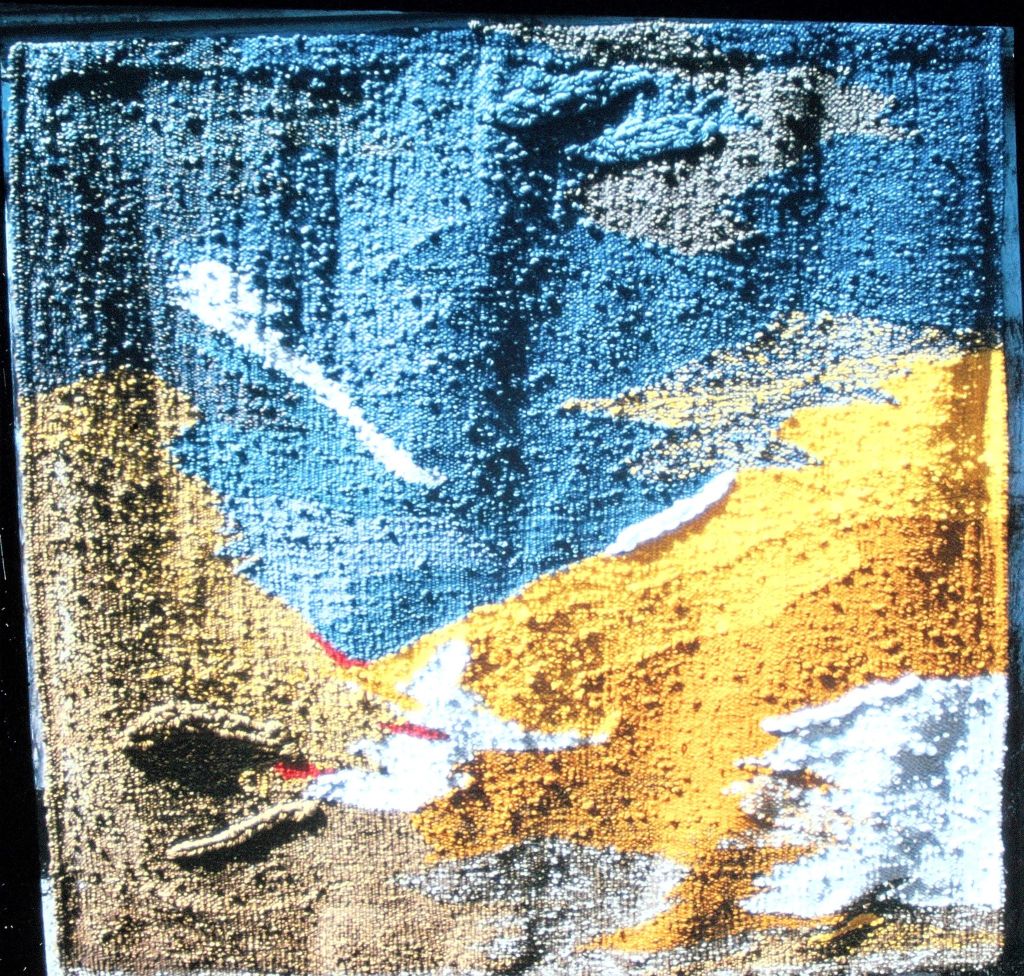
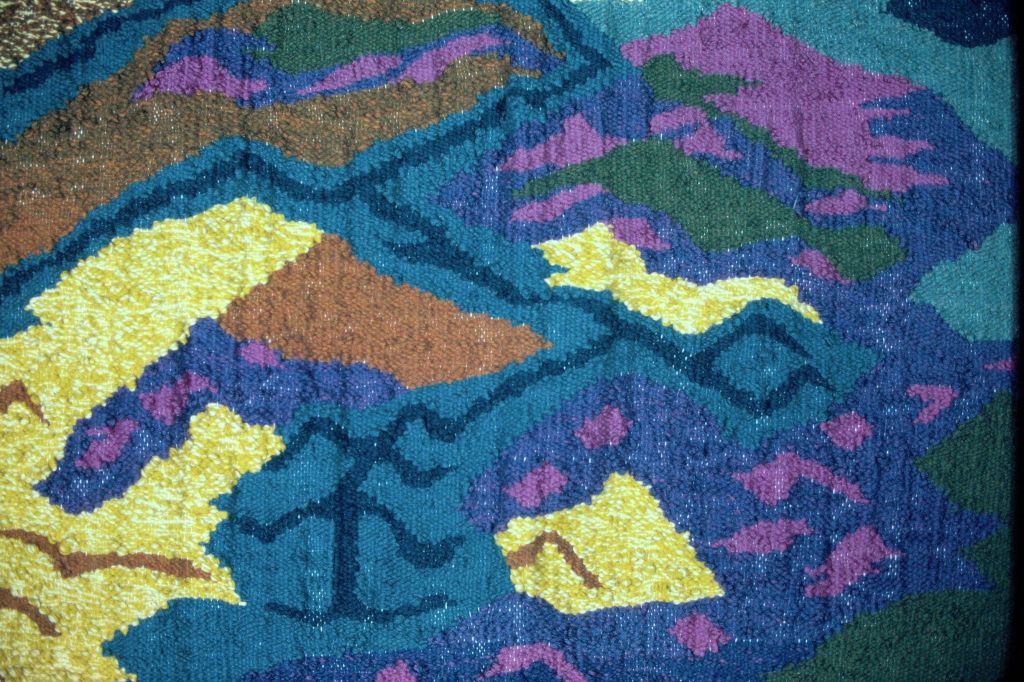
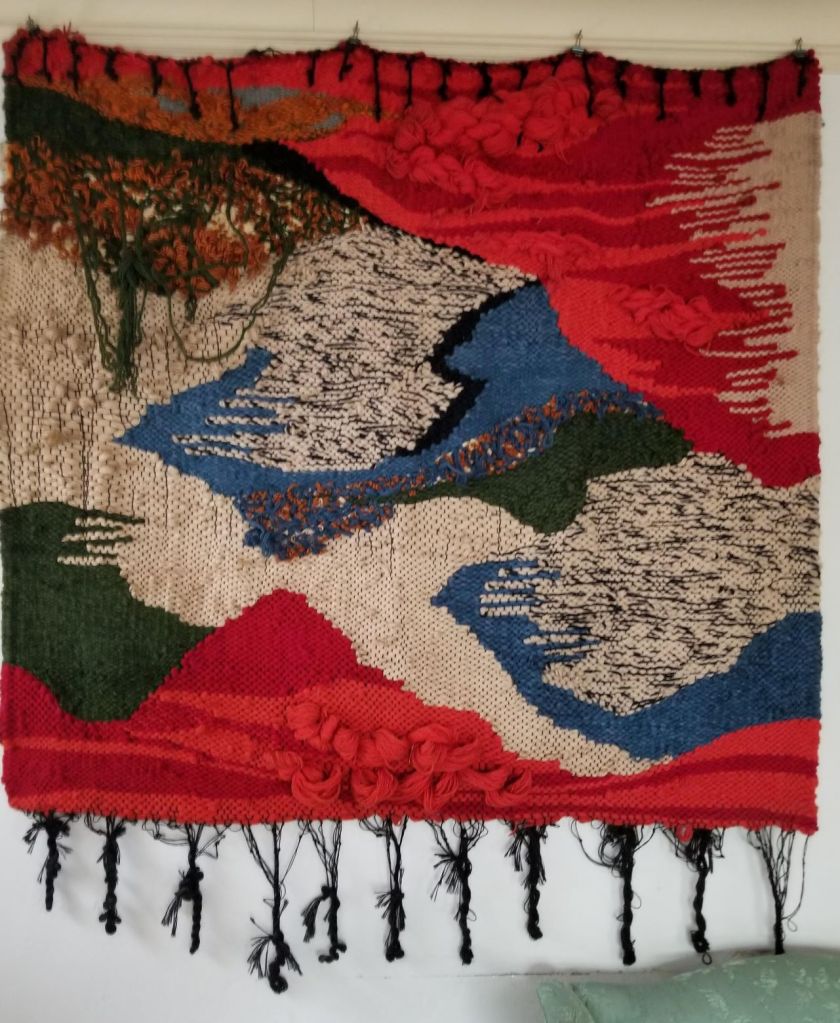
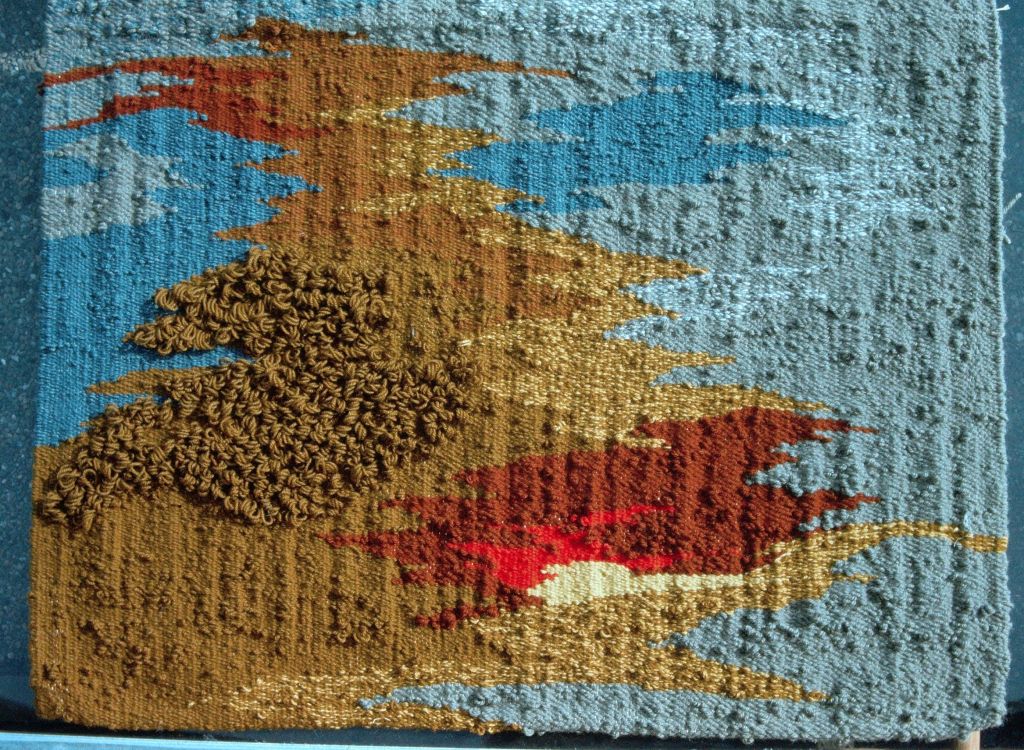
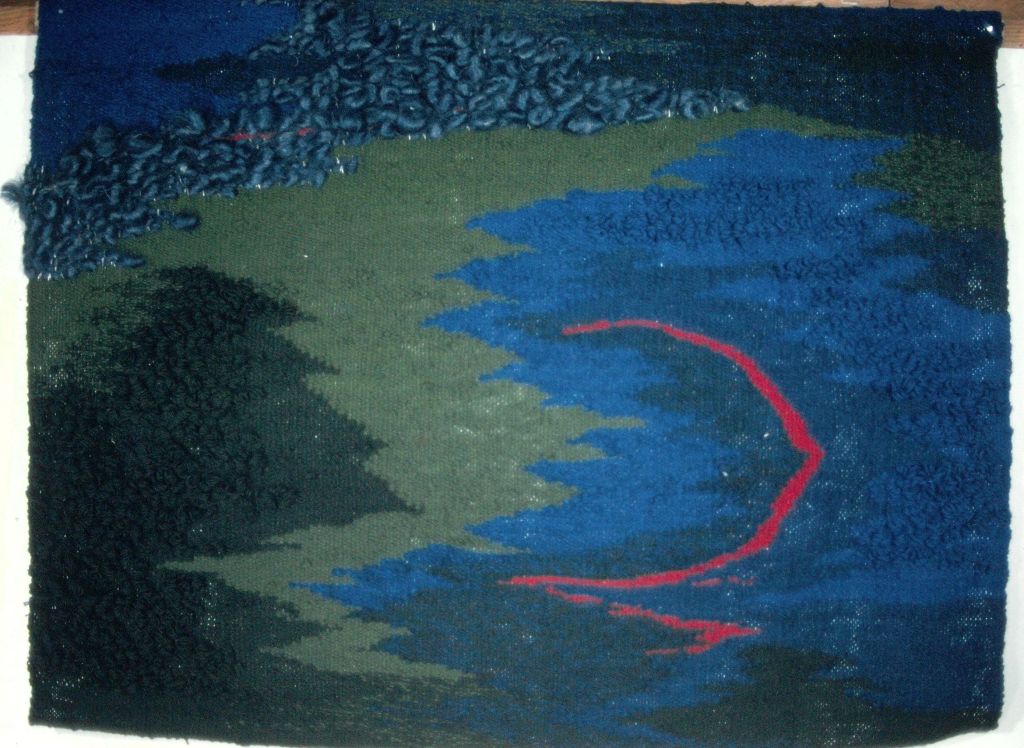
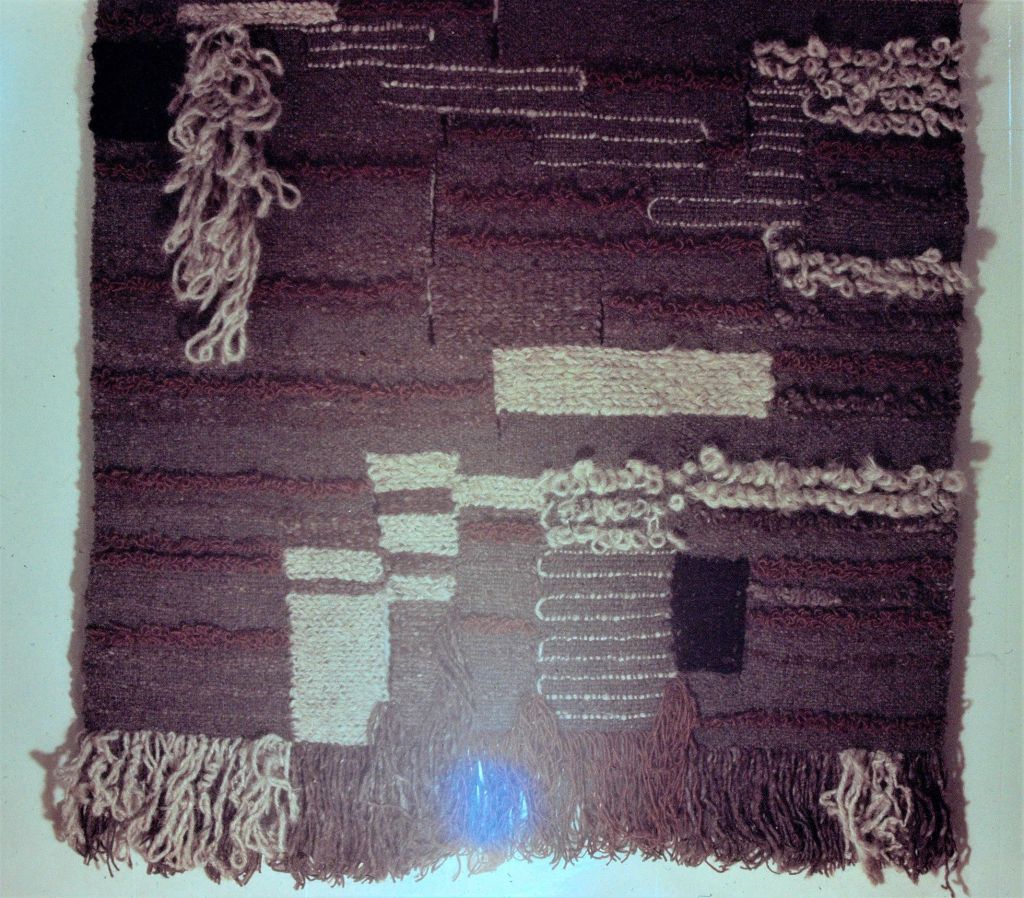
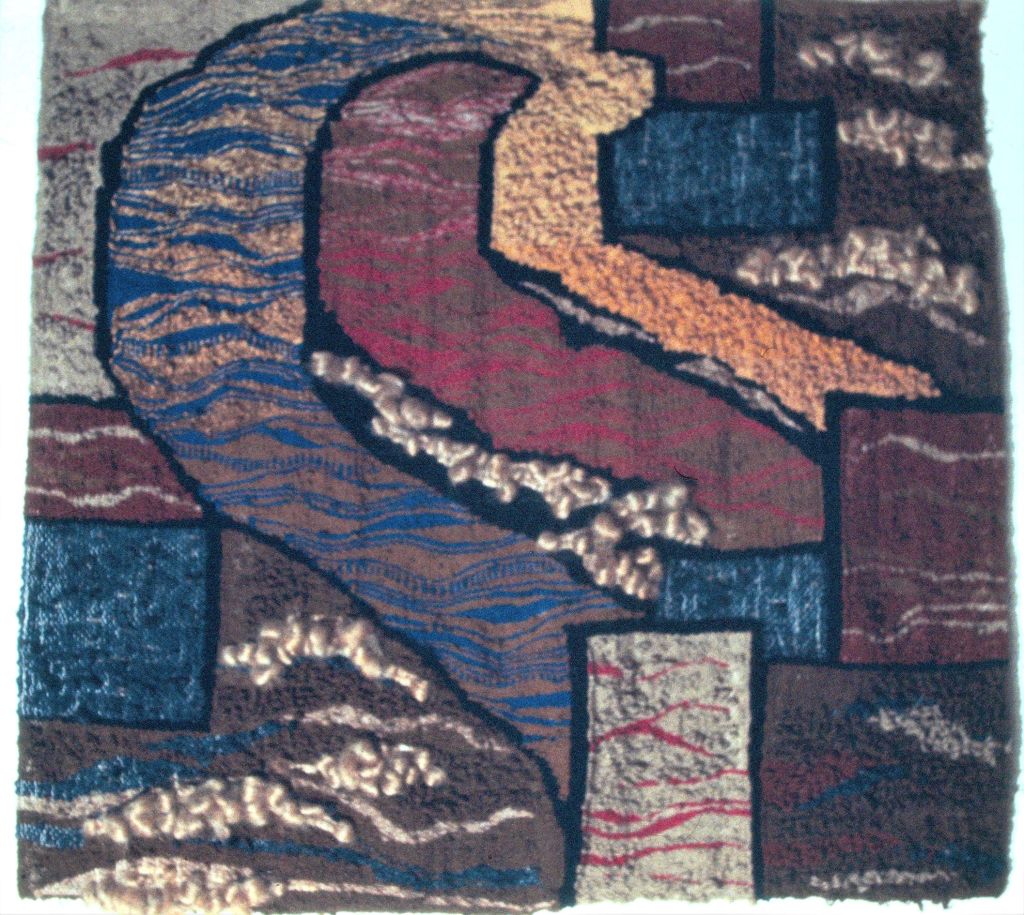
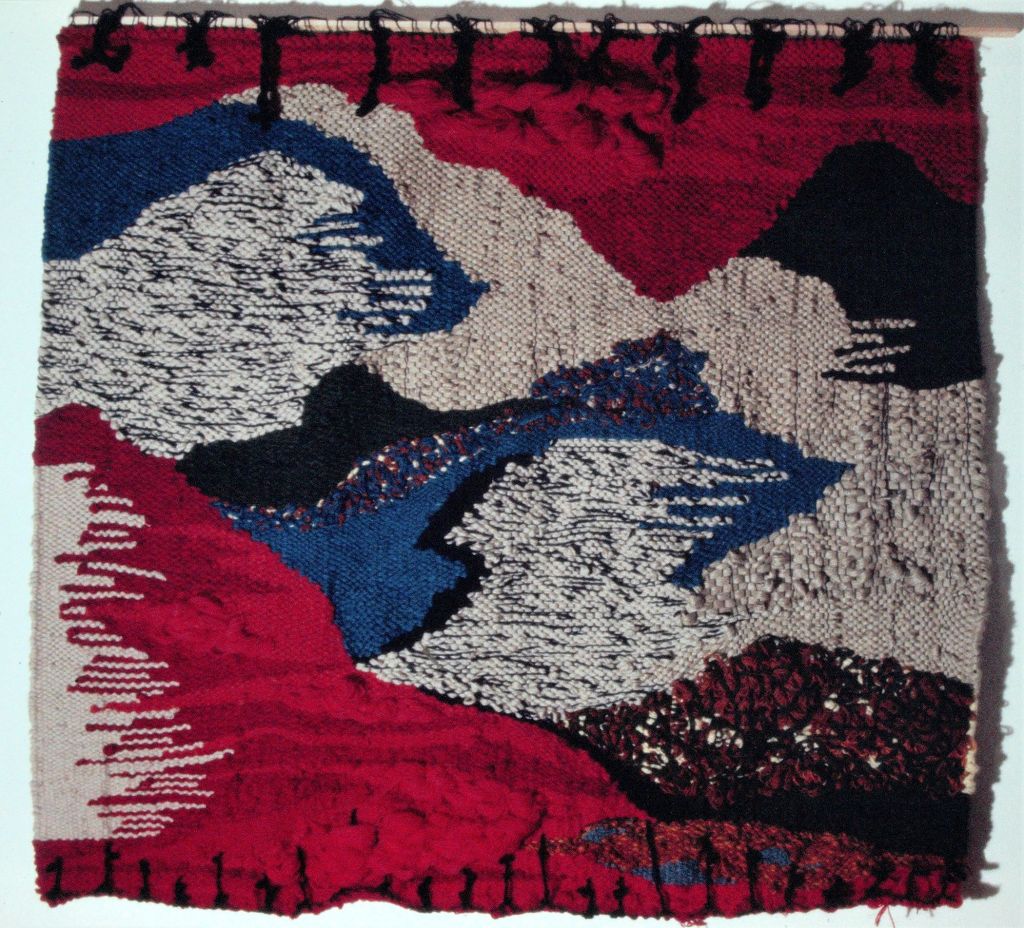
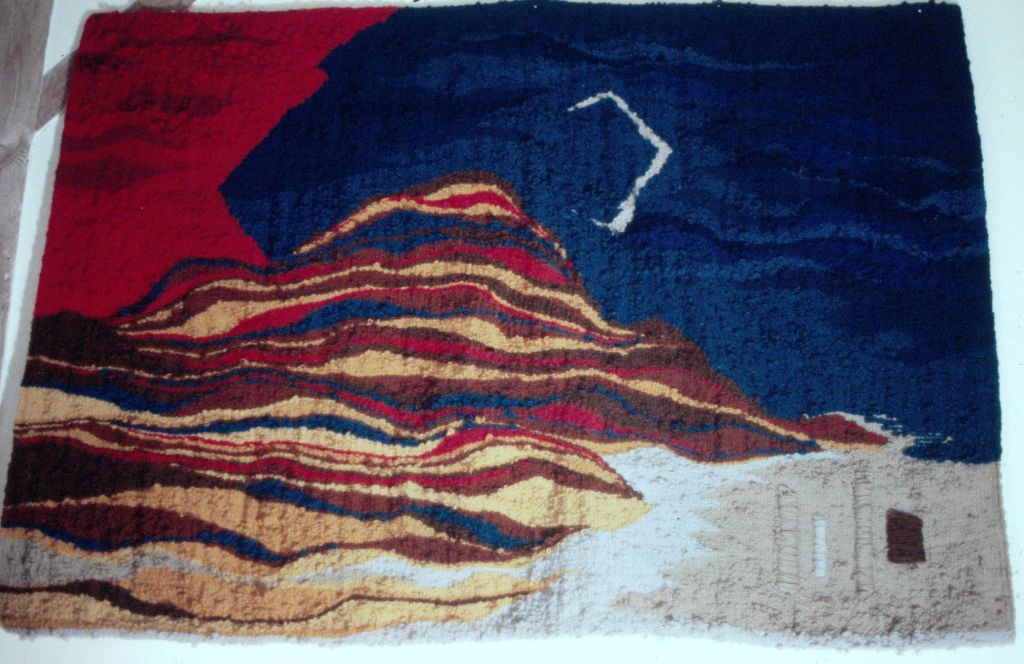
But there was no time to linger. I got online and ordered a gismo to transfer slides to digital files. Once I digitized them, I saved them to my computer. I looked at them together and stopped. Had I really done all these? Some I didn’t even remember. Others I did remember, but there were no records of them. Looking at the remaining images of my work, I can see a progression that I’m not sure I was even aware of at the time. What comes back to me now is the process of making the works, the hours of planning, weaving, fingers pulling cotton warp out, passing yarn through, then pounding it down, tight. The resulting weavings themselves are merely artifacts. Do they symbolize anything beyond themselves, anything besides form, texture, color, and the time and effort to make them? Or are they like my dead mother’s rosary, though meaningless to non-religious me, it’s not the symbolism of the beads, but their concrete physicality that conjures her.
These next pieces are becoming more textured and some have sections that were woven on a floor loom that were then woven into the larger piece on the tapestry loom. Unfortunately the color of the detail shots is not as accurate as the color of the full tapestry.
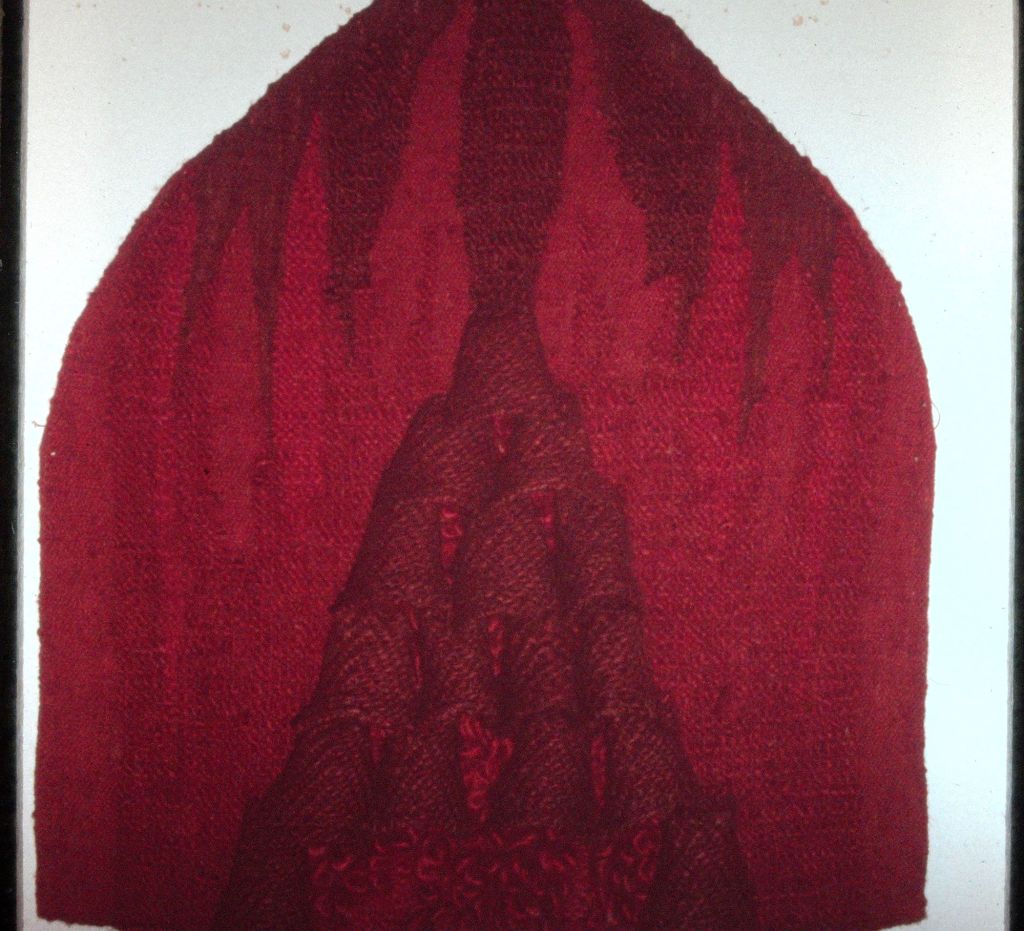
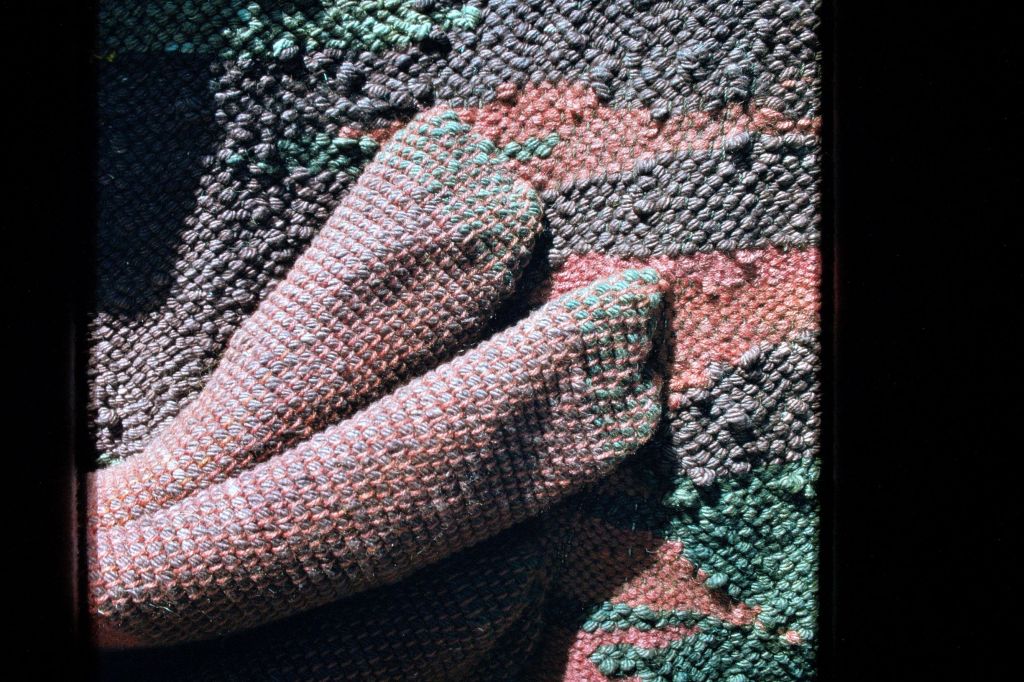
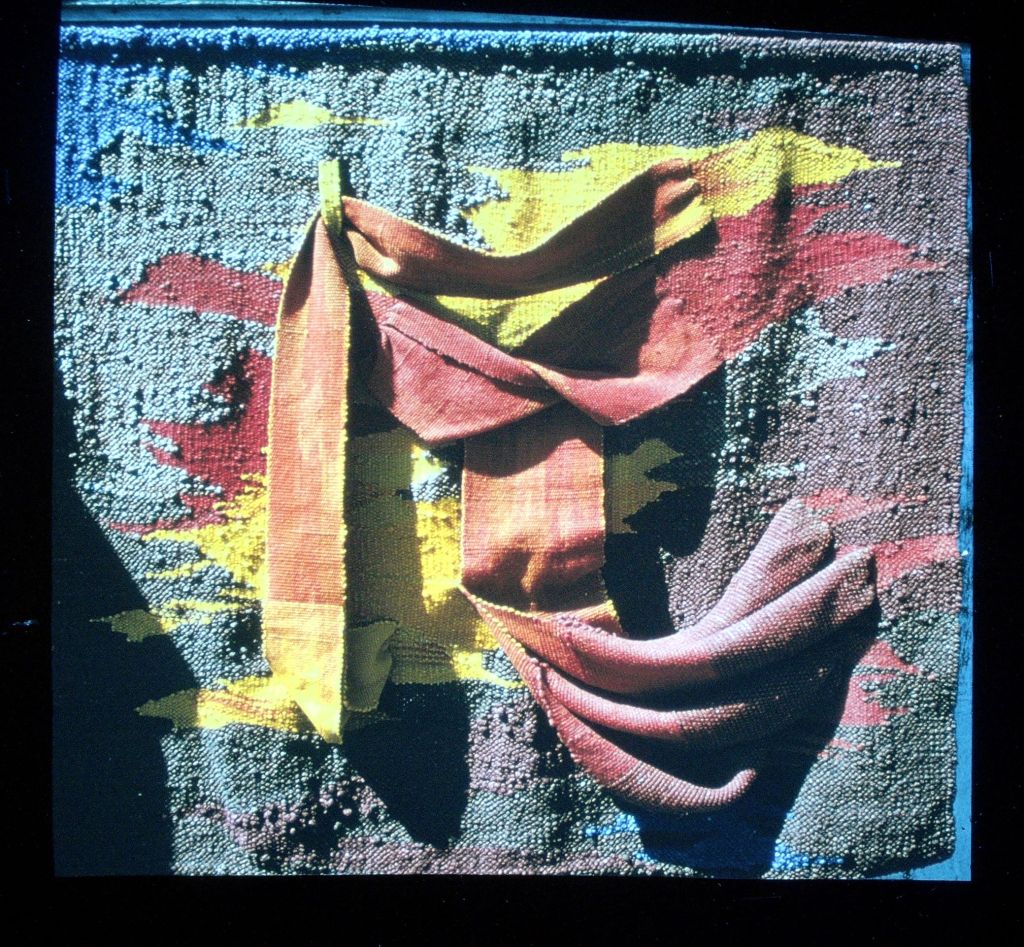
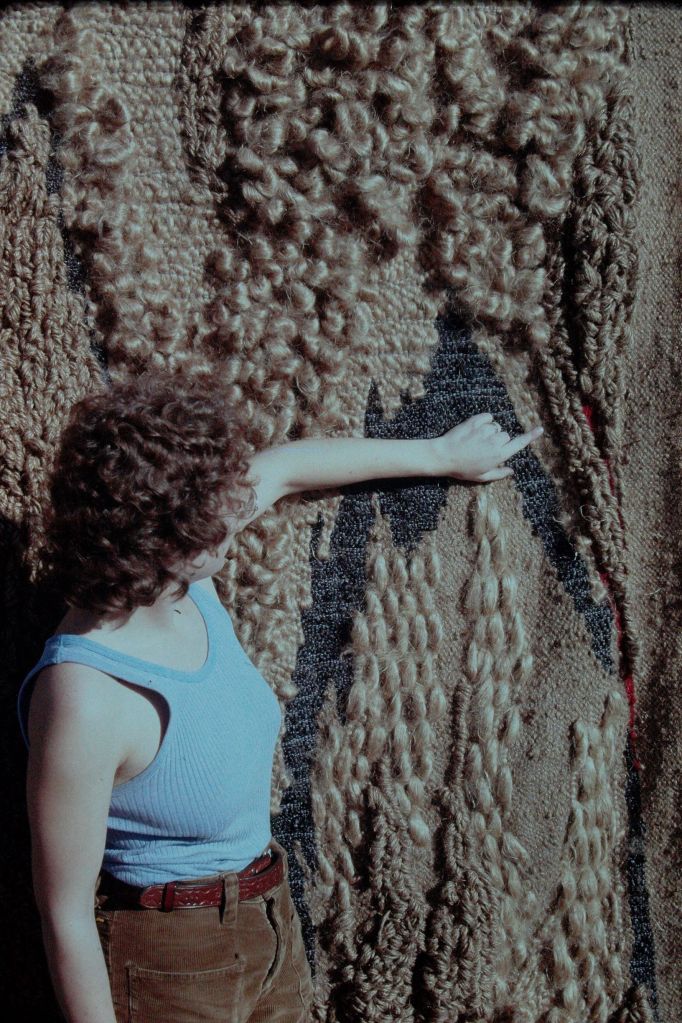
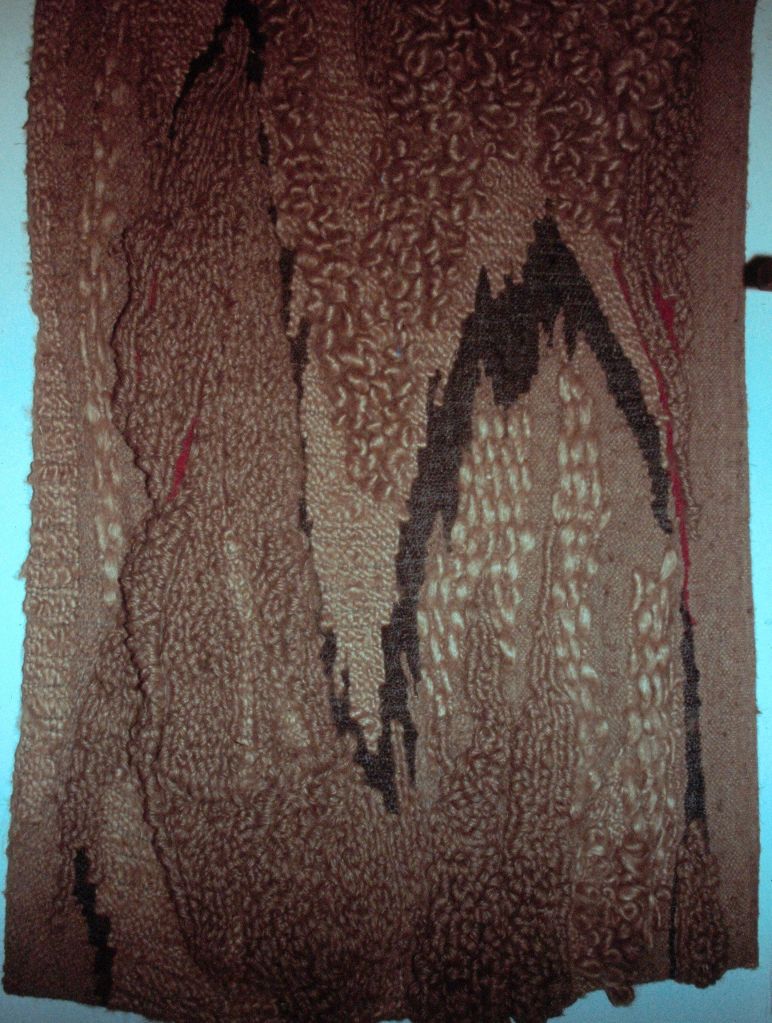
These are the later works, where I began adding found objects into the weaving. For these later works, still in the 1970s, I took what I thought was bold move and, after making the tapestry slashed it, creating holes and making its surface pucker and undulate.
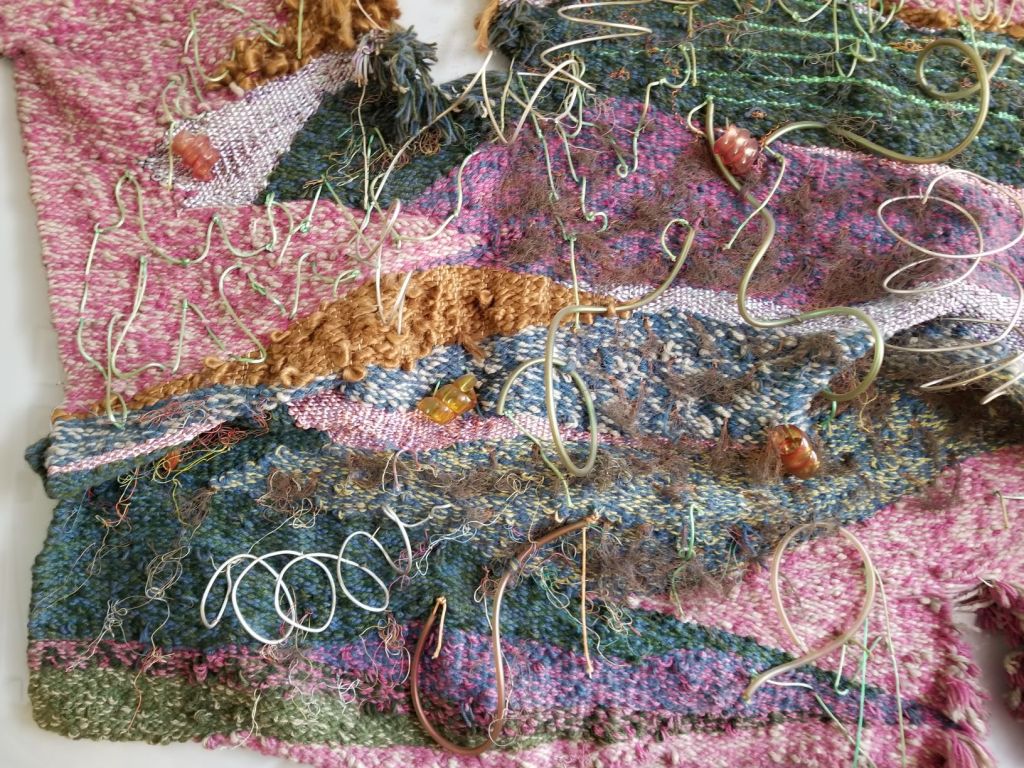
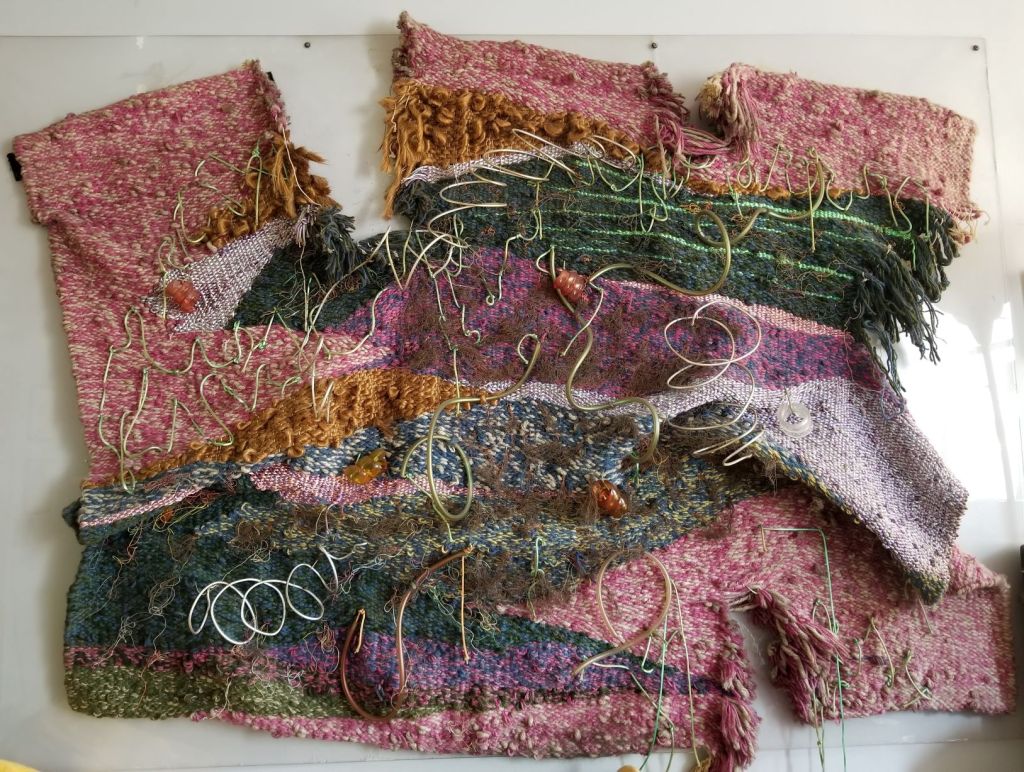
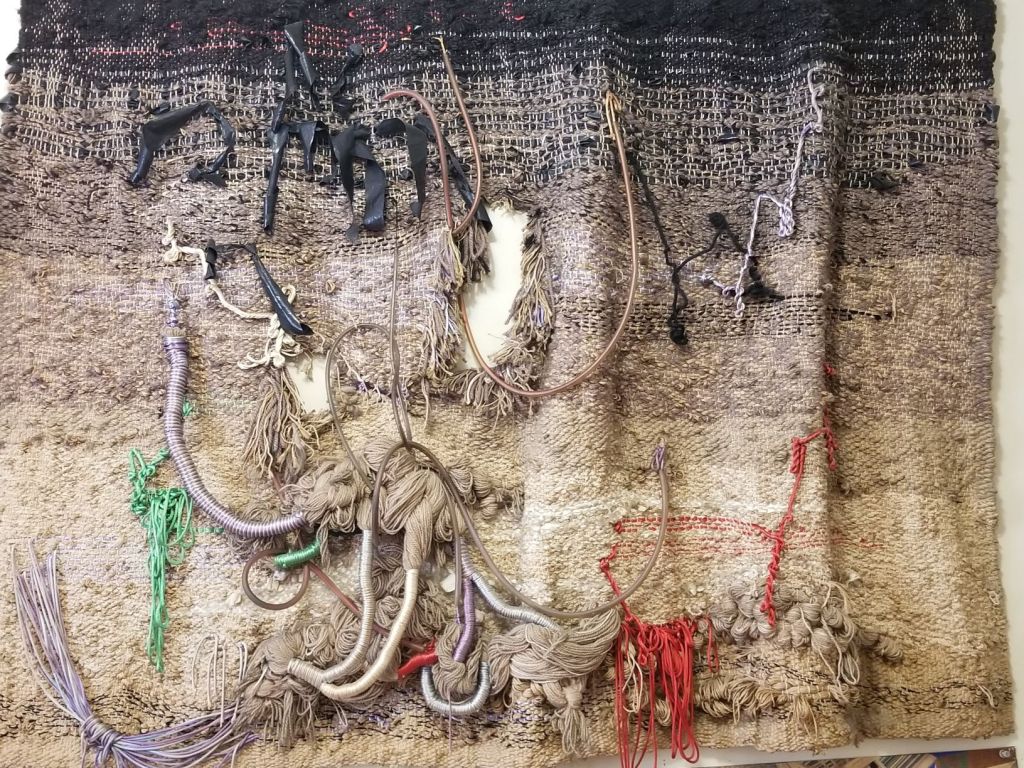
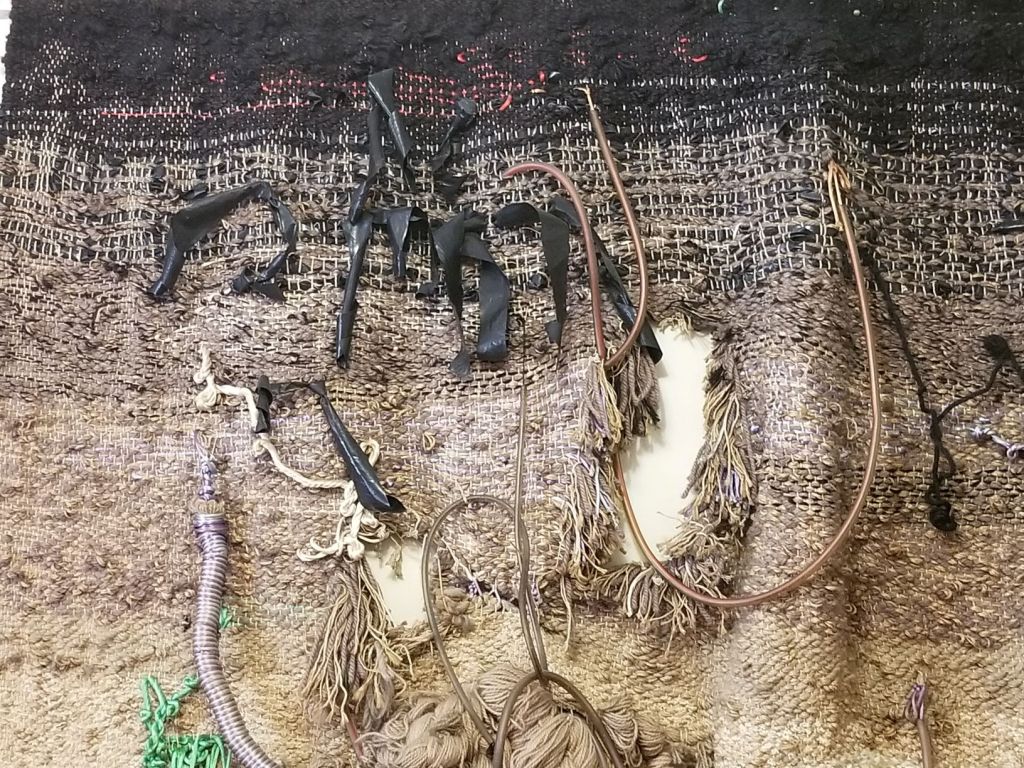
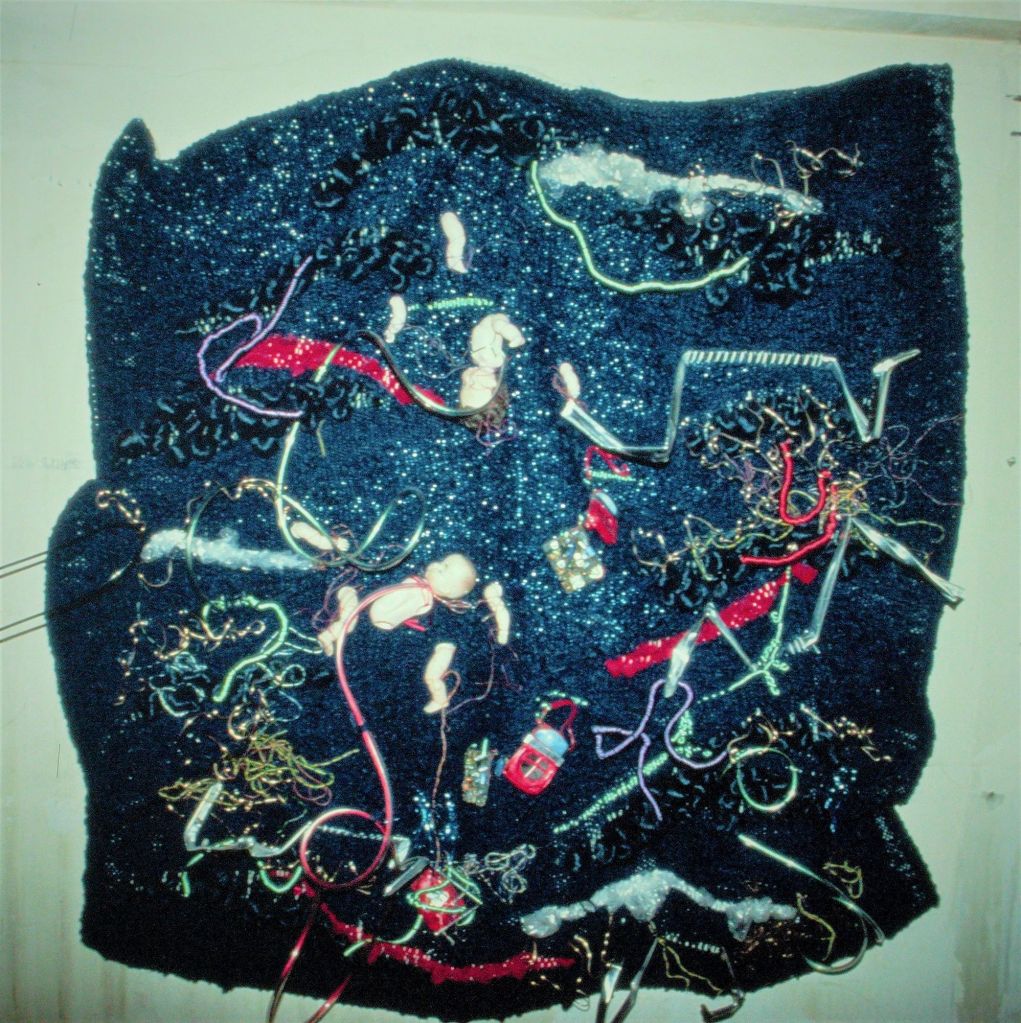
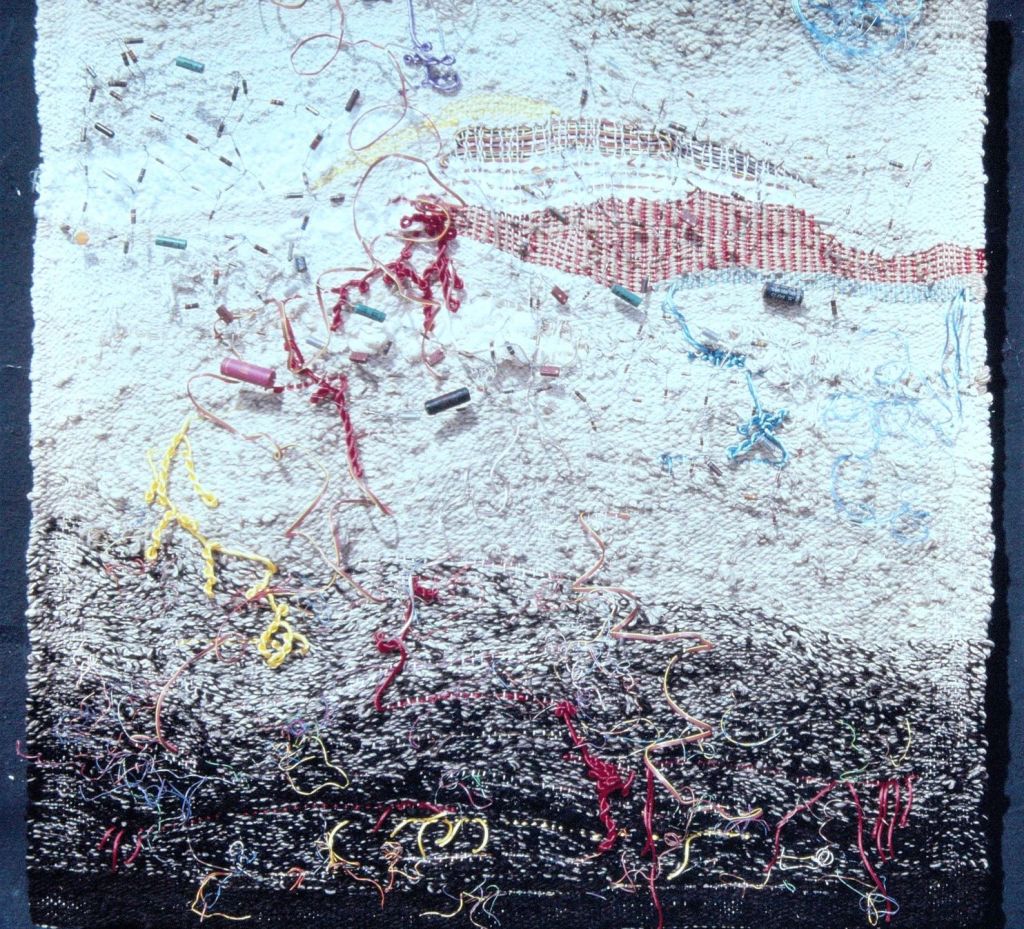
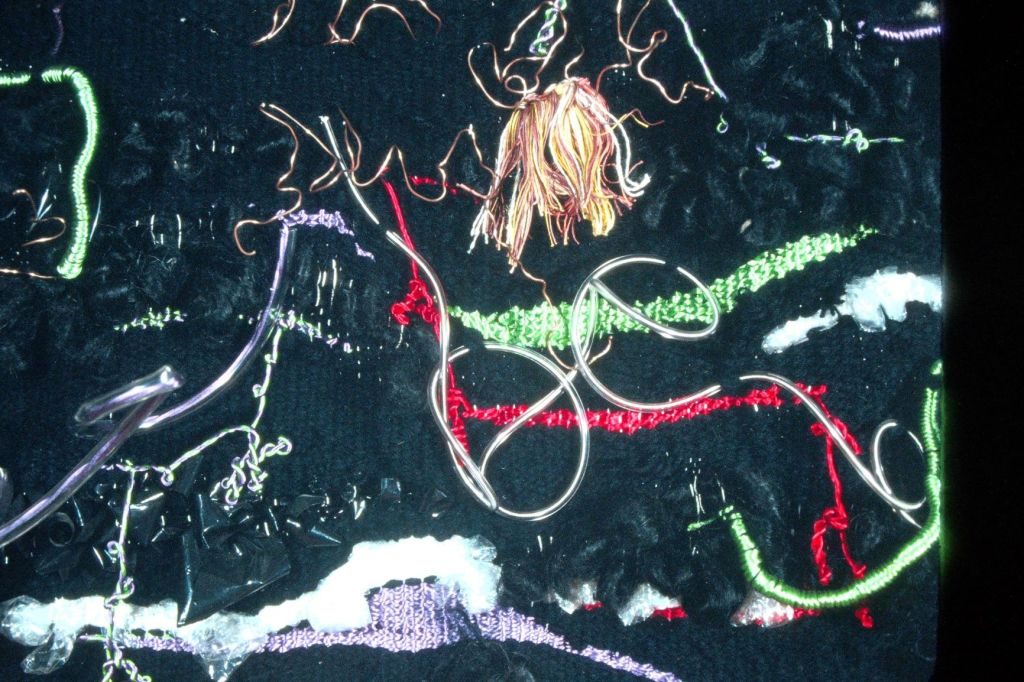
In 1981, I moved to New York City. I often have that same vague, lost feeling I had in my early twenties. Back in the 70s and 80s I had no idea where I was headed. Of course, I still have no idea where I’m headed, but now I have the ability to look back, but looking back at myself is disconcerting. Photographs and slides fill in some of the story, but they don’t reveal the self beneath. I can feel the love and friendship and artistry of the time, but not the politics, the wars, the pain and joy, the waitress jobs, the stories. Maybe that’s the point—don’t look back. Or. No. Look back in wonder.
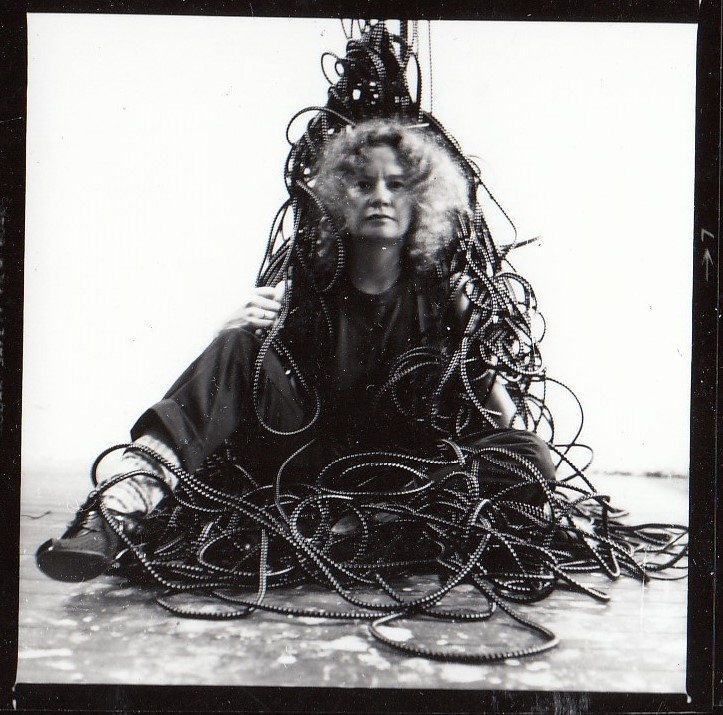
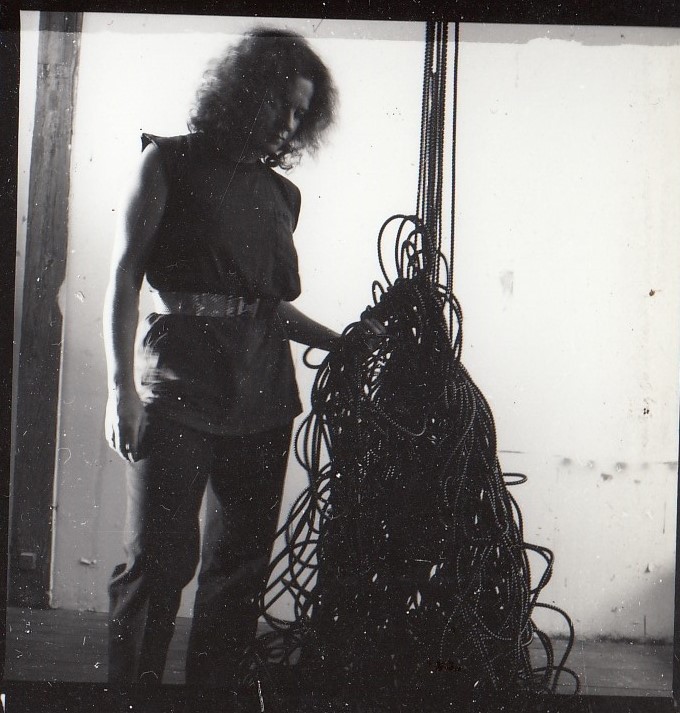
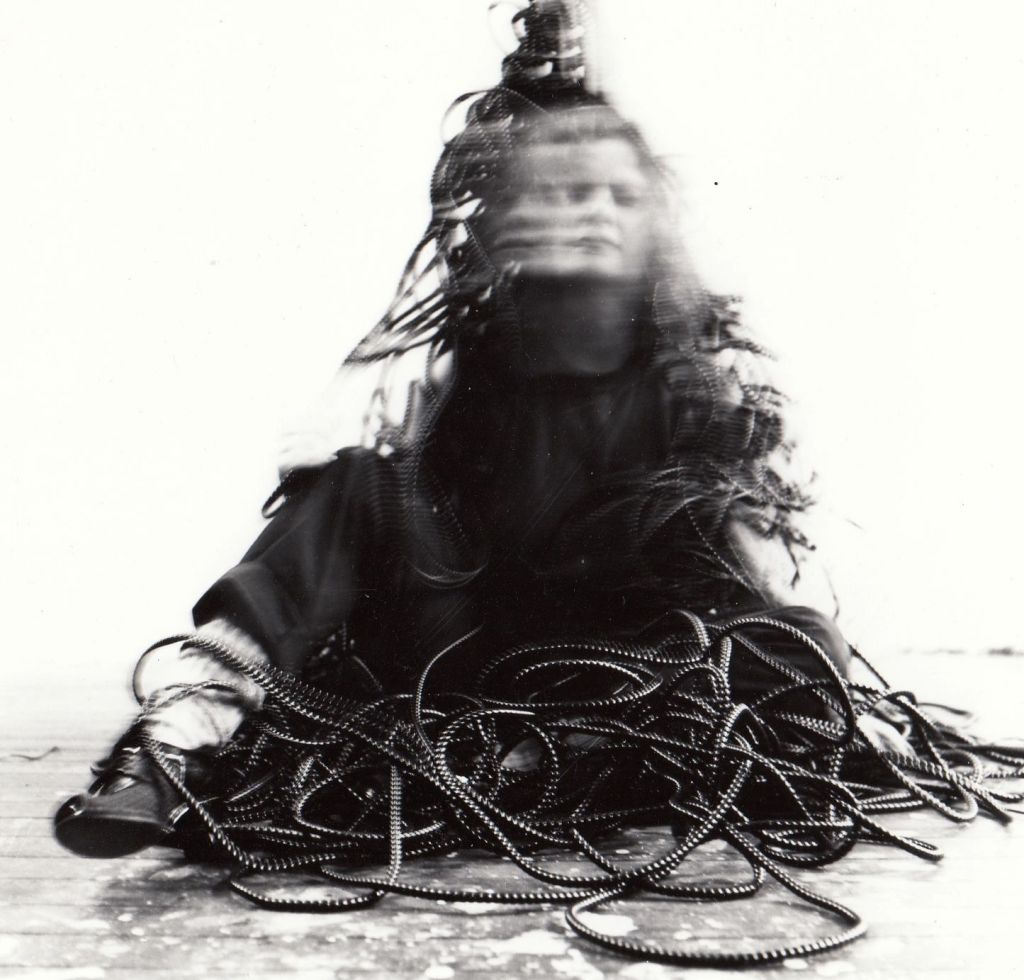
Black and white photos by Cathy Phoenix
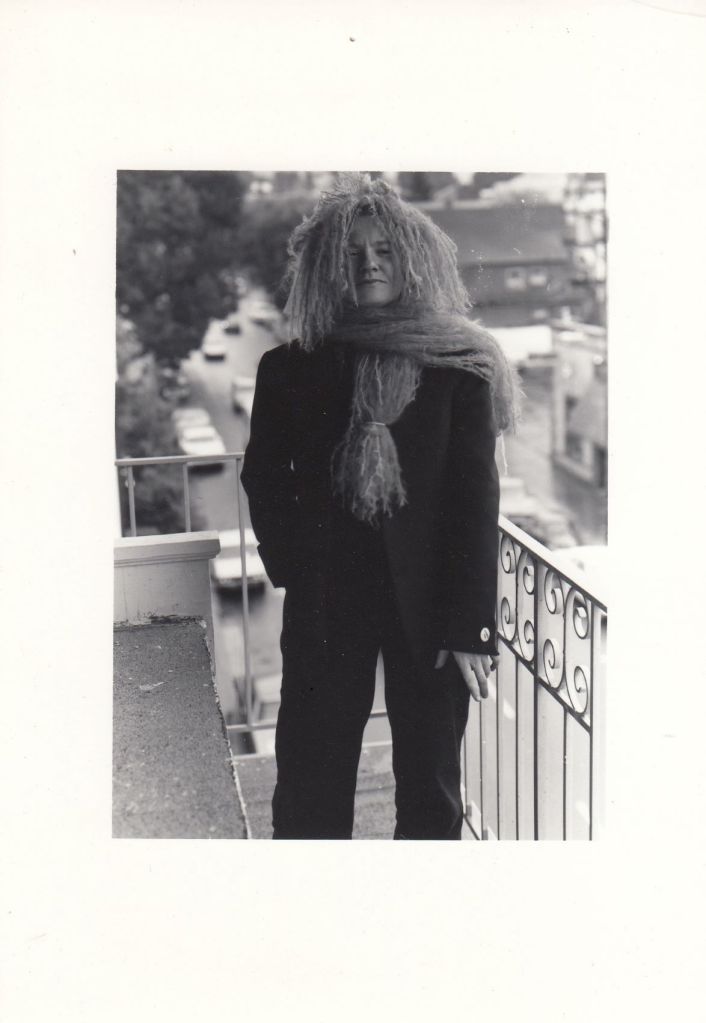
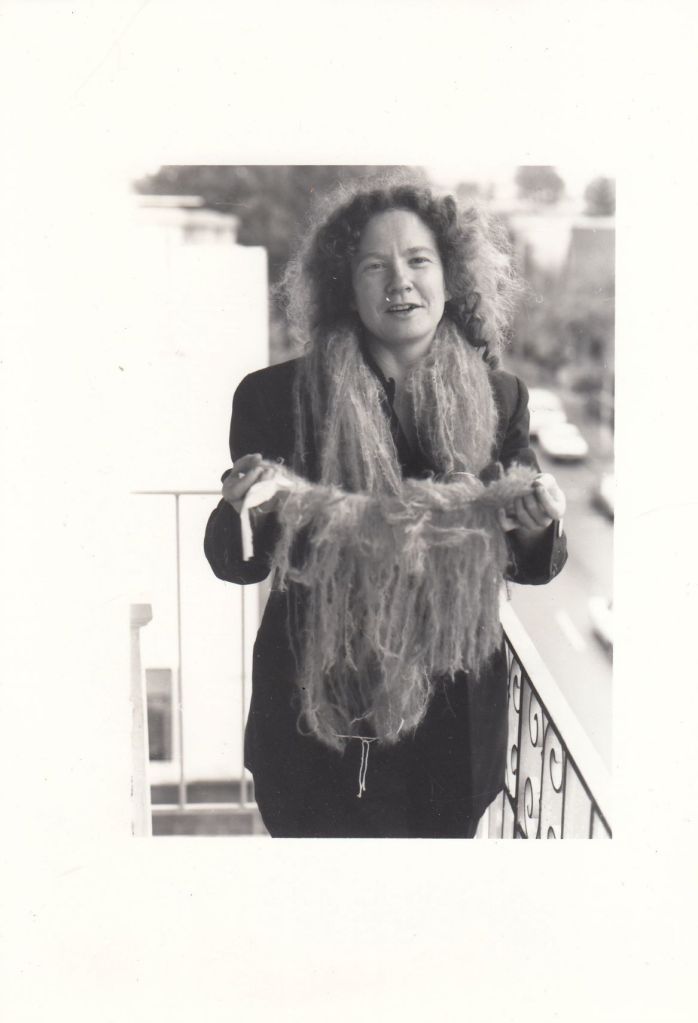
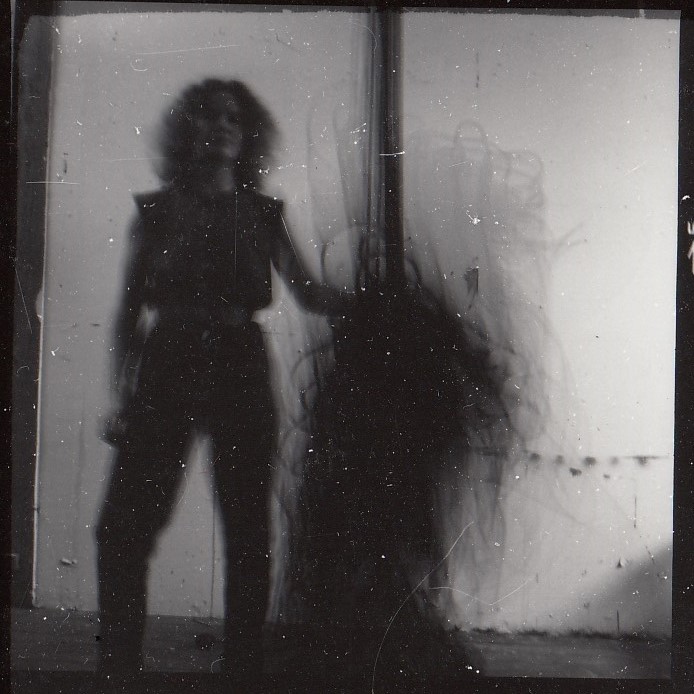
Black and white photos by Sian Murray

